I've watched a lot of blogs start, and a lot of blogs die. Most of them die for the same handful of reasons, and almost none of those reasons are talent.
I started blogging back when AdSense was still an easy way to turn a WordPress theme and some decent writing into beer money. Traffic came easier then.
Even mediocre posts could rank if you were patient enough. That era is over. Between AI search summarizing the top results before anyone clicks through, and every topic already covered a hundred times over, starting a blog today is a different game.
If you're new and feeling discouraged, here's what I've seen kill blogs before they had a chance, from my own mistakes and from watching other people make them.
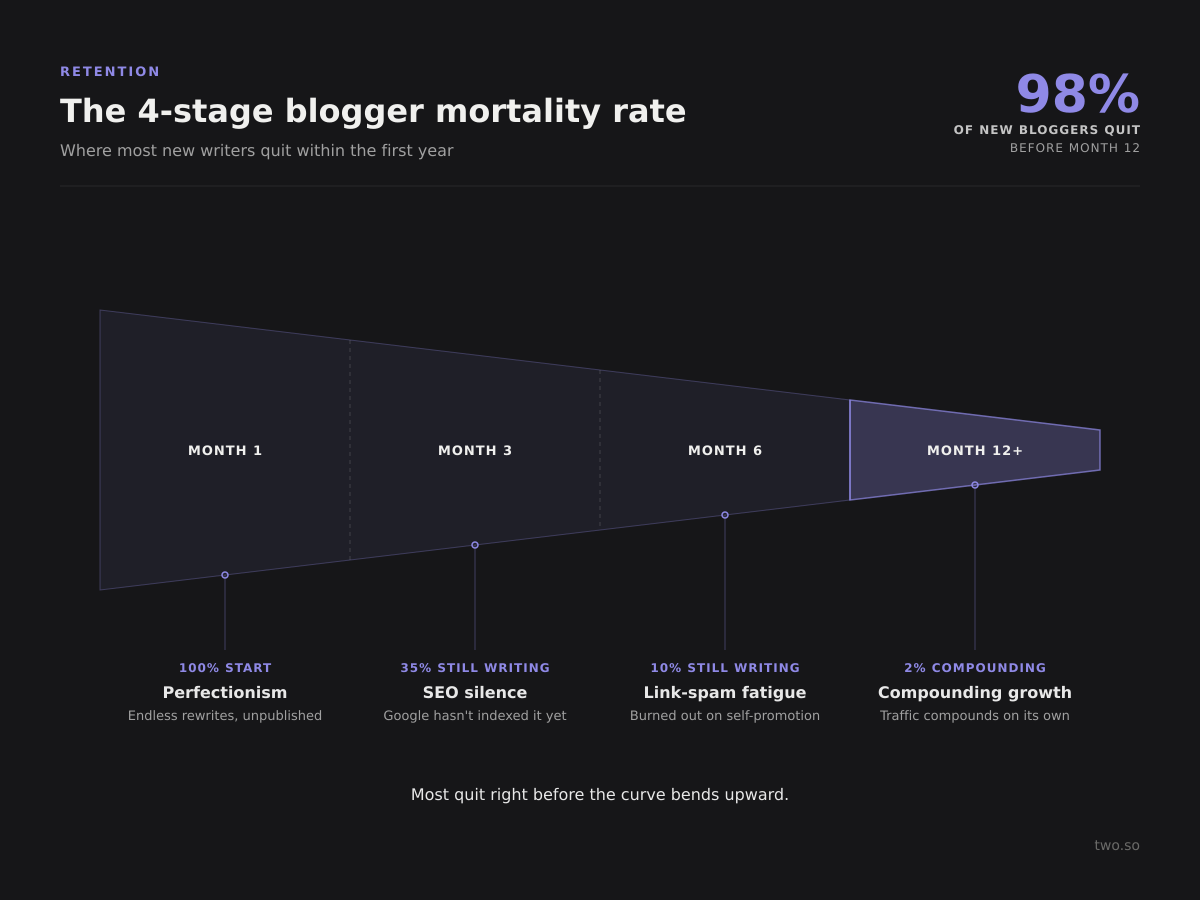
Trying too hard from the start
Most new bloggers show up with a ton of energy and a folder full of half-finished drafts. They rewrite the first post so many times it never goes up.
Here's the truth: your first ten to thirty posts will probably be bad. That's fine. Every blogger who's still around went through that stretch. They just never let it stop them from hitting publish.
Write it, publish it, move to the next one. You'll find your voice by writing forty posts, not by perfecting three.
Picking a niche you can't win
A lot of failed blogs picked the wrong fight before they wrote a single word.
Some choose a niche so broad it's impossible to stand out in, something like "productivity" or "health" with no real angle. Others jump straight into a topic already dominated by sites with a decade of head start and a team behind them, then wonder why nothing ranks.
The pattern I see most: bloggers switch niches every few months looking for the one that works, never staying long enough to find out if the niche they had would have paid off.
Some cover five unrelated topics on one blog, which makes it hard for readers or search engines to figure out what the blog is really about.
Pick something narrow enough that you can realistically become one of the best sources for it. Boring and specific beats broad and generic, every time.
Designing before you've published anything
A lot of bloggers spend their first month picking a theme instead of writing. They get lost comparing templates and plugins while the draft folder stays empty.
A pretty theme loaded with animations and unnecessary scripts slows down your page. Slow pages lose readers before they read a word, which is one more discouraging number for someone who hasn't even published yet.
Function first, design later. You can rebuild your site in a weekend once you know what your blog needs. You can't get back the months spent picking a theme instead of writing.
Publishing in bursts, then disappearing
This is the pattern I've watched kill more blogs than any algorithm update: someone publishes fifteen posts in a month, burns out, then goes quiet for a season.
New bloggers often set a schedule they can't sustain: three posts a week, every week, forever, and burn out within two months.
A blog that goes quiet loses momentum with readers and with search engines, and starting back up feels ten times harder than starting once.
It takes far more content than you'd expect to figure out what works for your blog. A slower, steady pace, one post a week you can keep, beats a sprint that ends in silence.
Padding posts with words nobody needs
Somewhere along the way, "longer post equals better post" became blogging gospel. New bloggers stretch a 400-word answer into 2,000 words to hit some number they think Google wants.
Readers can tell. They skim past the padding looking for the answer, and if they can't find it fast, they leave. Google's own updates have gone after exactly this kind of filler content, so it costs you twice.
Give the reader their answer near the top. Write long only when the topic genuinely needs the depth, not because a word count told you to.
Chasing SEO tricks that stopped working
Old SEO is mostly dead. The keyword-stuffed title, the "top 10" listicle format, the exact-match phrase repeated five times in a post, none of that carries the weight it used to.
Part of the problem is that a lot of new bloggers never learned the fundamentals underneath the tricks. They obsess over keyword density instead of answering the reader's real question, and their titles read like keyword soup instead of something a person would want to click.
Read also: Niche blogging isn't dead. Generic blogging just got harder.
Generative AI search now answers a lot of the questions people used to click through for, so the game has shifted underneath everyone. Chasing whatever's viral this week builds nothing lasting, while a handful of solid evergreen posts still bring in readers years later.
Check your analytics, see what's working, and expect some posts to carry the blog while others quietly do nothing. That's normal, not failure.
Writing about things you don't know
You used to be able to fake expertise online and get away with it. Not anymore. Search engines and readers have both gotten better at spotting content with nobody behind it.
If you start a blog about a topic you've never lived, it shows. The posts read like everyone else's posts, because they're built from the same secondhand sources everyone else used.
Using AI to write the whole thing without adding your own experience only makes this worse. You end up with generic content that could belong to anyone.
The bloggers who make it write from where they actually stand, sharing what they know or documenting what they're currently learning. Having an opinion, even one people disagree with, does more for your voice than a neutral summary ever will.
Read also: How to write blog posts AI can't fake
I do this with my own writing on TWO. Split view keeps my drafts and research notes side by side while I write, so what I publish still sounds like me instead of a rewritten summary of five other articles.
Writing without a distribution plan
Writing the post is half the job. A lot of new bloggers never learn the other half: getting it in front of anyone.
They publish and move straight to the next post, without sharing it anywhere, without linking it to their other posts, without building any way to reach readers again. I advise sharing on Pinterest first. It's the most underused blog traffic channel.
Relying only on Google for traffic means waiting months for a single channel to notice you exist.
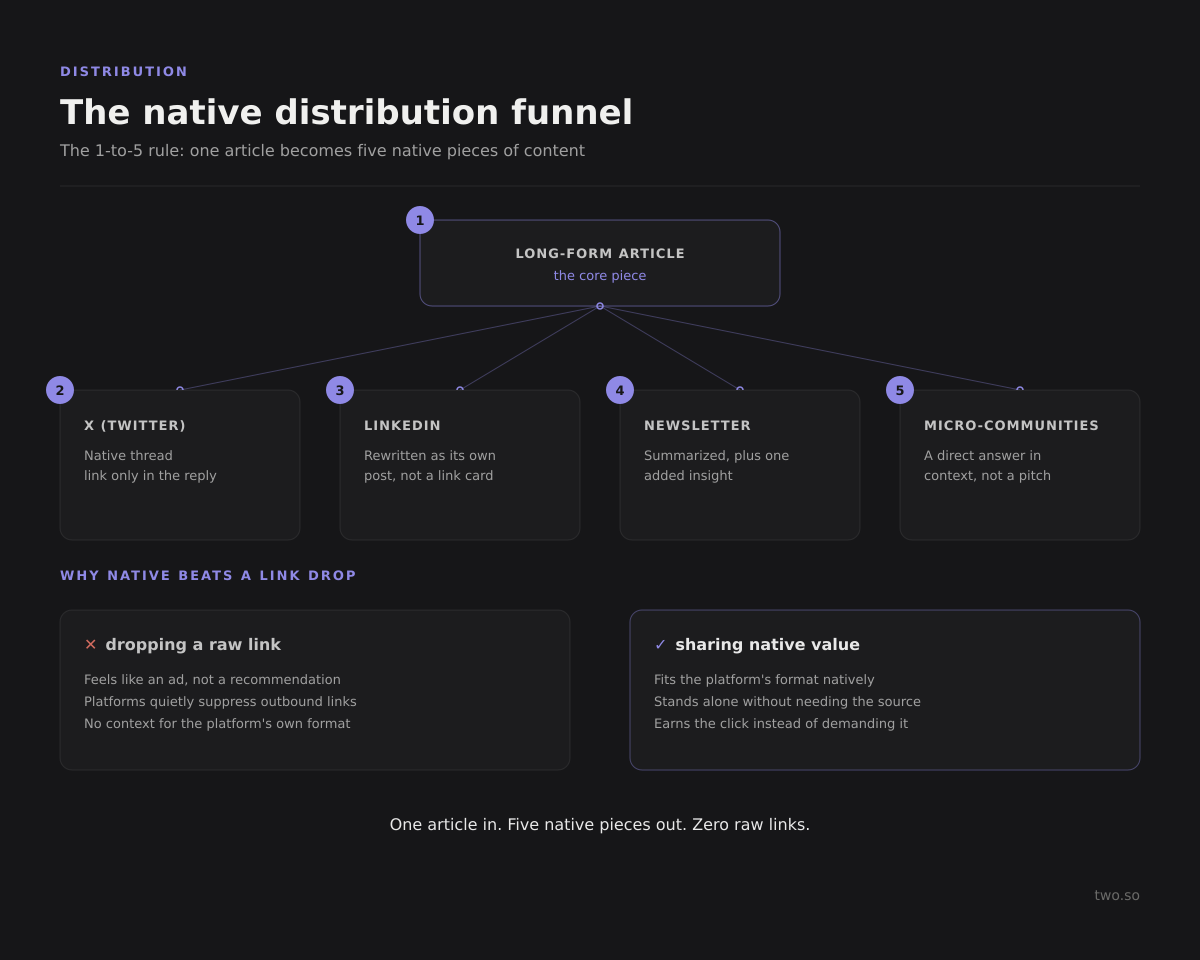
Building an email list gives you a way to reach readers that doesn't depend on an algorithm. Linking your posts together and grouping them into clusters around topics you want to own helps both readers and search engines understand what your blog is about.
Read also: How to get your first 1,000 blog readers
Going back to update old posts, or turning one that did well into a video or a thread, gets more mileage out of work you already did instead of starting from zero every time.
Monetizing before you have anyone to sell to
Some bloggers put ads across a blog with fifty visitors a month and wonder why it doesn't cover coffee money. Monetizing before you have an audience mostly annoys the few readers you do have.
There's also a mismatch in expectations I see a lot: writing for yourself, on your own schedule, with no real research into what readers want, then getting frustrated that it doesn't perform like a business.
Chasing follower counts instead of paying attention to who's really reading and coming back is the same mistake in a different outfit.
Build the audience first. Write for a specific reader, figure out what they need, and the monetization conversation gets a lot easier once there's someone actually there.
Quitting right before it would have worked
This is the one that gets almost everyone, including me at some point. New bloggers expect traffic within weeks. Google usually needs three to six months before it even properly notices a new site, let alone ranks it.
Low traffic in month two isn't failure, it's the normal starting point. But it's discouraging enough that most people quit right there, comparing their six-month-old blog to someone else's ten-year-old archive with hundreds of ranking posts.
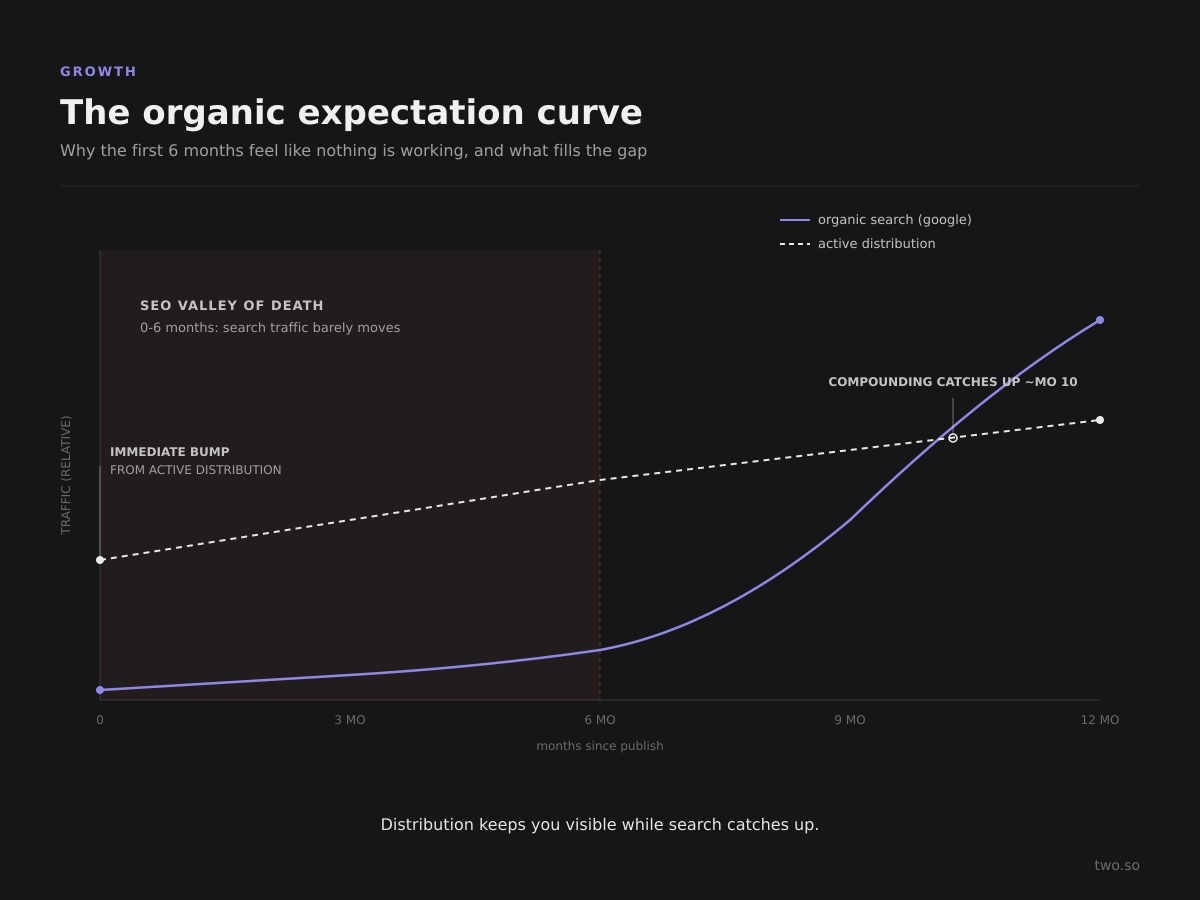
Blogging compounds. Old posts keep bringing readers while you write new ones.
Your writing gets better, your archive gets deeper, and eventually the math starts working in your favor. Most people quit in the twelve-to-eighteen-month window, right before that compounding effect kicks in.
More than anything else on this list, that's the real reason most blogs die: not bad writing, not bad SEO. They quit before they had time to get good.
None of this is about clever tactics. Blogging still works, but it demands more patience than it used to.
If you keep writing past the point where it feels pointless, you're already doing something most people who start a blog never manage.