I've met a lot of UGC creators over the years. I'm not deep in that world myself, but the model has always interested me: low barrier to entry, fast to start, almost no cost.
That's also exactly why it's so hard to build a real career out of it. Like most industries built on a low barrier to entry, the top spots go to a small percentage of people. And it's rarely because they're the most talented on camera.
Starting is easy. Staying isn't.
The creators who make it aren't necessarily better at the craft. They treat it like a business. Everyone else is competing on the same handful of platforms, chasing the same brands, and brands have an endless supply of creators to choose from.
Small creators feel this first. Deals get harder to land, pricing gets pushed down, and before long they're competing on price in a market that's already saturated. That's the trap. Not a talent problem, but a positioning problem.
Why blogging gets skipped
Almost every UGC creator I've talked to has some version of the same blind spot. A few reasons it keeps happening:
UGC is built for the algorithm, not for search. A blog post can still bring in traffic years after you hit publish.
"Content creator" has quietly become a synonym for "social media creator." Being a creator was never about the format.
They chase followers instead of demand. A follower has to see your post. A search can find your article years later, from someone who was never following you at all.
They underestimate how many buying decisions run through search first: "best X for Y," "X vs Y," "is X worth it," "how to use X." These are questions a UGC creator is often the best person alive to answer, and almost none of them do.
Their content has a short shelf life. A reel from six months ago is dead. A useful article from six months ago is still doing work today.
Video proves you can perform. Writing proves you understand.
A branded video shows you can hold a camera and deliver a script. A long article shows you understand positioning, consumer psychology, and what converts.
Those are different skills, and brands know the difference even when creators don't think about it that way.
Anyone can record a 15-second hook. Fewer people will sit down and document a real campaign, with real numbers, including the parts that didn't work. That kind of writing builds something a cheap competitor can't copy: a track record.
If a full case study feels like too much to start with, a blog doesn't have to be that. Treating it as a running journal of what you're testing and learning is still a stronger long-term bet than another AI-assisted caption, especially now that generic content is only getting easier to produce and easier to ignore.
Read also: How to start a blog in 2026: niche, planning, and AI
Do this consistently, and you build what I'd call a proof of experience moat. Once that exists, you stop pitching brands cold and start getting found. Cold pitching keeps you fighting for bottom-tier rates.
An article that shows real strategy work reads like the writing of a consultant, not a hired hand, and gets treated accordingly.
Read also: How to write blog posts AI can't fake
A blog compounds. Social media doesn't.
Every platform you don't own can change the rules on you at any time. Algorithm updates, reach drops, account restrictions, monetization changes, trends dying overnight. None of that touches your website.
A blog also gives you room that short-form content structurally can't. Thirty seconds can show something is true.
Fifteen hundred words can explain why it matters, walk through alternatives, answer the objections, and link to everything else you've built. That's also where a brand searching for someone who actually understands their niche is more likely to find you than on a social profile buried under everyone else's.
The math is boring, but it works. One article might bring in fifty visitors. A hundred articles bring in thousands. Five hundred genuinely useful ones start acting like a real acquisition channel, one that doesn't reset every time you stop posting
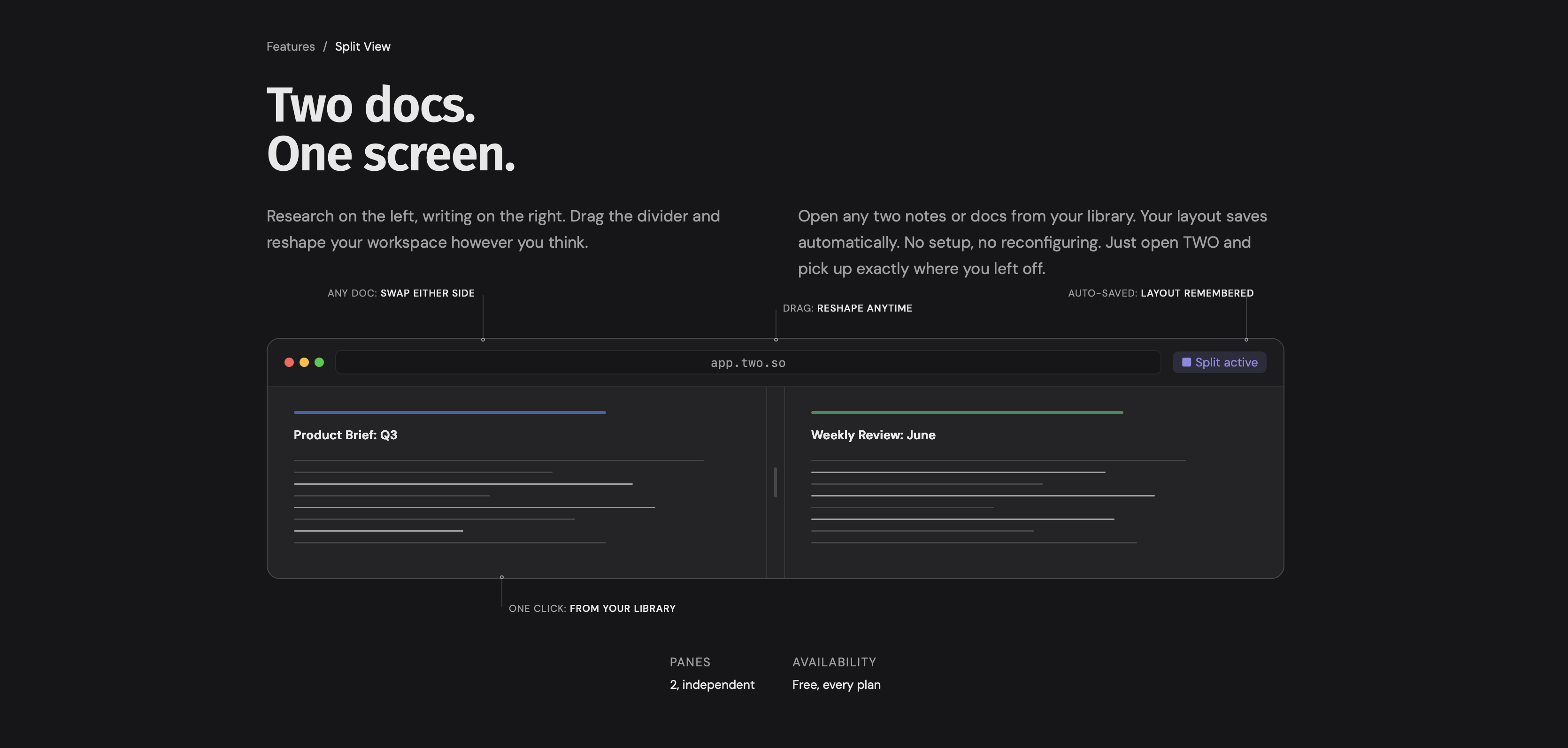
I draft most of mine in TWO, notes on one side and the draft on the other, though the tool matters far less than actually sitting down and writing.
None of this means dropping short-form content. It means stopping the habit of treating a TikTok and a blog post as competitors. They're not.
TikTok can feed the article. One piece of real expertise can become a blog post, a reel, a short, a pin, a newsletter, and a couple of posts on top, all pointing back to one home base you actually own. Social becomes distribution. Search becomes discovery. Email becomes retention.
What skipping it costs you as a UGC creator
Every year without a blog is a year of compounding you don't get back:
Years of potential organic traffic, gone
No evergreen discovery working in the background
One fewer way for brands to find you outside a crowded feed
No email list quietly building alongside your content
Missed affiliate and product revenue that a blog naturally supports
No personal brand that survives a platform's next algorithm change
Starting from zero on every single post instead of building a library
And the frustrating part is that most UGC creators have already done the hard work. They have the opinions, the product knowledge, the failures, the before-and-afters.
They're just not turning any of it into something that exists on the internet permanently.
Final word
I brought this up again with two UGC creators last week. Neither agreed with me, which is fine. But both spend a fair amount of every week complaining they're not earning enough.
They see a blog as a chore, not an asset. An extra task, not an extension of the work they're already doing. What they're missing is that the gap they're feeling isn't a rates problem.
It's that almost nobody in their space is doing this, which is exactly what makes it worth doing.